

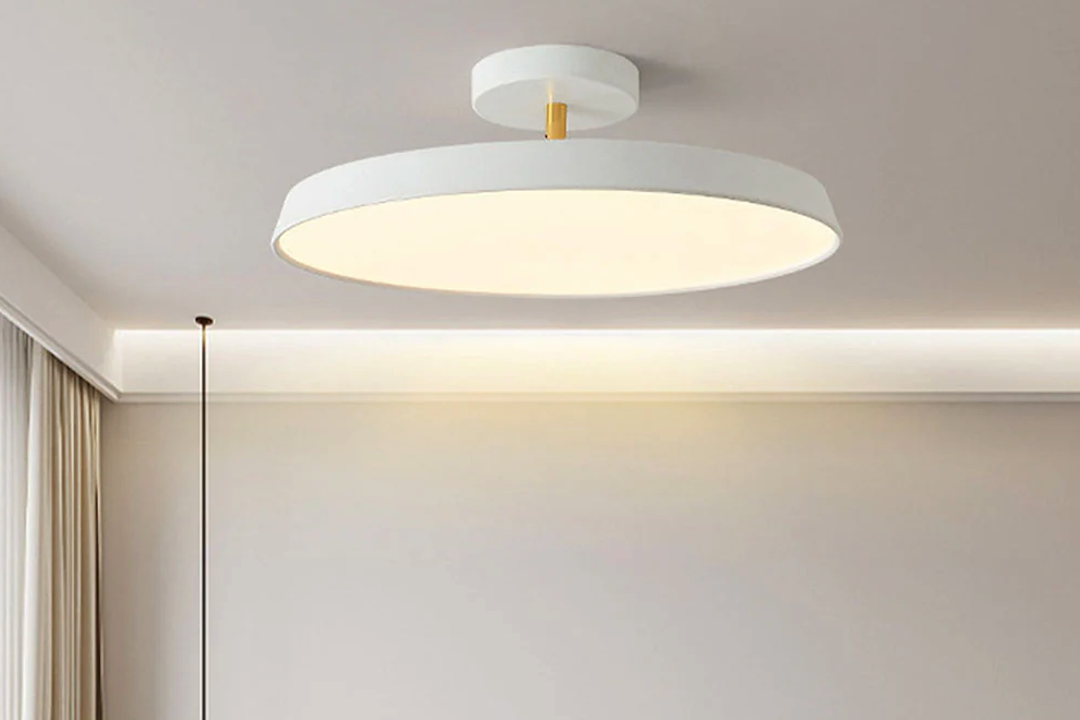
Thinking about a sleek, functional lighting solution for your small bedroom? A modern minimalist white LED ceiling light is often a great choice. It offers clean aesthetics, efficient illumination, and energy savings, all without overwhelming your space. These fixtures are designed to be subtle yet effective, providing ample light while blending seamlessly into a contemporary decor.
Why Choose a Modern Minimalist LED?
When you’re dealing with a smaller room, every element you introduce needs to earn its place. A bulky, ornate light Aifeellighting fixture can make a small bedroom feel even smaller and cluttered. Modern minimalist designs, particularly in white, address this directly by offering a discreet presence.
Space-Saving Design
The primary benefit is how little visual space they consume. These lights are often flush-mounted or semi-flush, meaning they sit close to the ceiling. This is crucial in rooms with lower ceiling heights or where you want to maintain an open, airy feel. You don’t have dangling pendants or large chandeliers taking up valuable vertical space.
Blends with Decor
White is a universal color. A white ceiling light practically disappears against a white or light-colored ceiling, making it a chameleon that adapts to various decor styles. Whether your bedroom leans Scandinavian, industrial, or purely contemporary, a simple white fixture won’t clash. It’s an accent that isn’t really an accent; it’s just there, doing its job.
Energy Efficiency
LED technology is inherently energy-efficient. Compared to traditional incandescent or even fluorescent bulbs, LEDs consume significantly less power while producing the same or even greater light output. This translates directly into lower electricity bills, which is always a welcome practical benefit.
Long Lifespan
Another practical advantage of LEDs is their extended lifespan. You’re looking at tens of thousands of hours of operation, often meaning you won’t need to replace the bulb for many, many years. This is particularly convenient for ceiling fixtures, where changing bulbs can sometimes be a bit of a hassle.
Key Features to Look For
Not all minimalist white LED ceiling lights are created equal. To ensure you’re getting the best fit for your small bedroom, consider some specific features.
Brightness (Lumens)
Don’t confuse wattage with brightness. Lumens are the accurate measure of light output. For a small bedroom, you’ll generally want a fixture that provides enough light for reading, getting dressed, and general activities.
- Understanding Lumens: A good starting point for a small bedroom (say, 8×10 to 10×12 feet) would be around 1,500 to 2,500 lumens. If the room tends to be darker or you prefer a brighter space, you might go a bit higher. Conversely, if you rely heavily on bedside lamps for task lighting, you might opt for slightly less.
- Dimming Capabilities: This is a crucial feature. Having the ability to dim your ceiling light allows you to adjust the ambiance. Full brightness for cleaning or getting ready, and a softer glow for winding down in the evening. Make sure the fixture is “dimmable” and that you have a compatible dimmer switch installed.
Color Temperature (Kelvin)
The color temperature of a light dictates its “warmth” or “coolness.” This greatly impacts the mood and functionality of a room.
- Warm White (2700K-3000K): This mimics traditional incandescent bulbs, offering a cozy, inviting glow. It’s often preferred for bedrooms because it promotes relaxation.
- Neutral White (3500K-4000K): A more balanced light, good for tasks without being overly stark. It’s often seen as a good compromise if you need decent task lighting but still want some warmth.
- Cool White/Daylight (5000K-6500K): This is a brighter, bluer light, sometimes perceived as more clinical. While great for focused work in offices or kitchens, it might be too harsh for a bedroom, especially in a minimalist setup where the light source itself is the primary illuminator. For a bedroom, sticking to warmer or neutral temperatures is generally recommended.
Installation Type
The way the light mounts to your ceiling can affect its appearance and how much space it occupies.
- Flush Mount: These fixtures sit directly against the ceiling, offering the most seamless and low-profile look. They are ideal for rooms with lower ceilings or when you want the light to be as inconspicuous as possible. Think of a flat disk or square that almost disappears.
- Semi-Flush Mount: These lights have a short stem or gap between the fixture and the ceiling. They offer a slightly more decorative element than flush mounts but still maintain a relatively close profile. This can sometimes create a nice light spill pattern on the ceiling that a flush mount might not. For a minimalist aesthetic, ensure the “gap” or stem is very minimal.
Material and Finish
For a modern minimalist white LED ceiling light, the material and finish are usually straightforward, but worth a quick thought.
- Matte White: Often preferred for its understated elegance and ability to blend in. It diffuses light gently and avoids reflections.
- Gloss White: Can offer a slightly more contemporary, reflective look. It might catch the eye a bit more.
- Acrylic Diffuser: Most modern LED fixtures use an acrylic or polycarbonate diffuser to spread the light evenly and reduce glare. Ensure it’s a good quality diffuser that won’t yellow over time or create noticeable hot spots.
Design Considerations for Small Bedrooms
Beyond the technical specs, think about how the light fixture will integrate into your specific room.
Keep it Simple
The “minimalist” in the description is key. Avoid anything with extensive detailing, exposed screws, or unnecessary embellishments. The beauty of these fixtures lies in their simplicity and functionality. A plain white, geometric shape (round, square, rectangular) will serve you best.
Size Appropriateness
While you’re already looking for a smaller fixture by default, consider the exact dimensions.
- Diameter/Side Length: A fixture that’s too small might look lost on the ceiling and struggle to adequately light the room, requiring higher lumen output that could feel harsh. One that’s too large could start to feel bulky. Aim for something proportional to the room’s footprint – an 18-inch diameter for a 10×10 room might be a good starting point, but this can vary.
- Ceiling Height: Again, prioritize flush or very low-profile semi-flush mounts if your ceiling is 8 feet or under. Taller ceilings (9 feet+) offer a bit more flexibility, but a minimalist look still benefits from a discreet fixture.
Integration with Other Lighting
Rarely is a ceiling light the only light source in a bedroom. Think about how it will work with your table lamps, floor lamps, or any accent lighting.
- Layered Lighting: The ceiling light often serves as ambient, general illumination. Bedside lamps are for task lighting (reading) and soft, localized light. A good dimmable ceiling light can transition between these roles, but it’s important to have complementary light sources.
- Matching Color Temperatures: Try to keep the color temperature of your ceiling light consistent with your other primary bedroom lights. Mixing dramatically different color temperatures can create an unsettling visual effect. If your bedside lamps are warm white, try to find a ceiling light that can also provide warm white light, even if it’s adjustable.
Installation and Maintenance
These fixtures are generally straightforward, but a few practical notes on installation and maintenance can save you headaches.
DIY vs. Professional Installation
If you’re comfortable with basic electrical work (turning off the power, connecting wires, mounting a fixture), many of these lights are designed for DIY installation. They often come with clear instructions. However, if you’re unsure, or if your current wiring needs modification, hiring a qualified electrician is always the safer and recommended option.
Mounting Considerations
- Junction Box: Most ceiling lights mount directly to an existing electrical junction box. Ensure your box is adequately sized and securely fastened to the ceiling joist.
- Weight: Modern LED fixtures are generally lightweight, but always double-check the mounting instructions and ensure your ceiling can support the fixture’s weight.
Cleaning and Care
Minimalist designs are typically easy to clean, which is a nice practical perk.
- Dusting: Regular dusting with a soft, dry cloth is usually all that’s needed to keep the diffuser and housing looking clean.
- Wiping: If there are smudges, a slightly damp cloth with plain water can usually take care of it. Avoid harsh chemical cleaners, as they can sometimes damage plastic diffusers or painted finishes.
- LEDs Don’t Get Hot: While LEDs produce some heat, they don’t get scorching hot like incandescent bulbs. This means you don’t have to worry as much about heat discoloration on the fixture or surrounding ceiling, which also simplifies maintenance.
Common Misconceptions & What to Avoid
It can be easy to make assumptions when shopping for something seemingly simple. Here are a few things to watch out for.
Don’t Prioritize Price Over Quality
While there are many affordable options, extremely cheap LED fixtures might compromise on light quality (e.g., poor color rendering – how accurately colors appear under the light), flicker issues, or have a less robust build. A slightly higher investment can mean better performance and longevity.
Avoid Over-Sizing
It’s tempting to think “bigger is better” for brightness, but a physically large fixture in a small room can be visually overwhelming. Focus on lumens and dimmability, not just the physical footprint.
Don’t Forget Dimmer Compatibility
This is a recurring point because it’s so important for a bedroom. If you buy a dimmable fixture, make sure your dimmer switch is also compatible with LED lights. Old incandescent dimmers can cause flickering or damage to LED drivers. Look for “LED compatible” or “forward/reverse phase” dimmers.
Don’t Assume Color Temperature is Adjustable
Unless explicitly stated as “tunable white” or “color changing,” most LED fixtures have a fixed color temperature. If you want the ability to switch between warm, neutral, and cool white, you need to specifically look for that feature. Otherwise, choose a fixed temperature that you’ll be happy with long-term for your bedroom.
Practical Choices for Different Needs
Even within the category of modern minimalist white LED ceiling lights, there are subtle variations that cater to different preferences.
For the Ultra-Minimalist
If you want the light to almost disappear, look for a very thin, flush-mount circular or square panel light. These often have a very clean edge and a uniform glow across the entire surface, providing ambient lighting without any visual distraction.
For a Touch More Softness
Consider fixtures with a slightly rounded edge or a very subtle, almost imperceptible curve. Sometimes a semi-flush mount with a very shallow gap can create a nice, soft halo effect on the ceiling, adding a touch of diffused light upward.
For Those Who Need More Directional Light
While most minimalist ceiling lights provide general ambient light, some might have very subtle, integrated directional elements if you need a focused spot for artwork or a specific area. These are less common in general ambient fixtures, but worth noting if your definition of “minimalist” allows for subtle functionality.
Final Thoughts on Your Bedroom Lighting
A modern minimalist white LED ceiling light is a thoughtful choice for a small bedroom. It’s a pragmatic solution that keeps things clean, bright, and energy-efficient. By focusing on lumens, color temperature, and ensuring it integrates well with your existing decor and other lighting, you can create a comfortable and functional space. Don’t overthink it, but do consider the practicalities – you’ll appreciate the understated elegance and reliability it brings to your room.